Fire Safety Training – Care Homes
Care homes face distinct fire‑safety challenges: residents with limited mobility, oxygen therapy, and many other medical needs; communal living spaces; high volumes of electrical and mobility equipment; and the need to protect personal possessions and medication.
Fire‑safety compliance in a care home is not optional — it’s essential for resident safety, regulatory compliance, and continuity of care. PRT‑Training delivers practical, scenario‑based fire‑safety training designed specifically for the realities of frontline care‑home work.
We specialise in fire training, and our instructors are serving or former firefighters with hands‑on experience in residential and healthcare environments. We can deliver all courses on-site and tailor them to minimise disruption to residents and staff.
Our Fire Safety Courses for Care Homes

Prices
We offer competitive, transparent pricing and all courses are VAT‑free.
Fire Warden Course
£450
No VAT to pay
popular
Fire Safety Awareness Course
£350
No VAT to pay
Fire Extinguisher Course
£375
No VAT to pay
Fire Evacuation Drill Service
£350
No VAT to pay
A bespoke fire evacuation drill service. Ideal for testing your fire strategy, improving staff response times, and reinforcing previous fire safety training.
Areas We Cover
East Midlands, including Lincolnshire, Nottinghamshire, Derbyshire, Leicestershire, Rutland, Cambridgeshire, Northamptonshire, and East Yorkshire.
If you are located further away, please contact us to see if we can arrange a visit.
Why Fire Safety Matters in Care Homes
Care homes combine high‑risk ignition sources with residents who may be unable to self‑evacuate, creating a heightened duty of care. Key risk factors include:
- Oxygen therapy and oxygen‑enriched atmospheres
- Mobility aids, hoists, and high volumes of electrical equipment
- Communal kitchens, laundry rooms, and treatment or medication storage
- Residents with restricted mobility or cognitive impairment requiring PEEPs
- High footfall in reception and communal areas
A fire in a care home can escalate quickly; training ensures staff respond calmly and correctly, with resident safety as the priority.
Core Modules and Benefits
Core Modules
- Identifying fire hazards in residential care settings
- Safe use and storage of oxygen and medical gases
- Managing electrical and mobility‑equipment risks
- Evacuation strategies for immobile or cognitively impaired residents
- Fire‑warden responsibilities specific to care homes
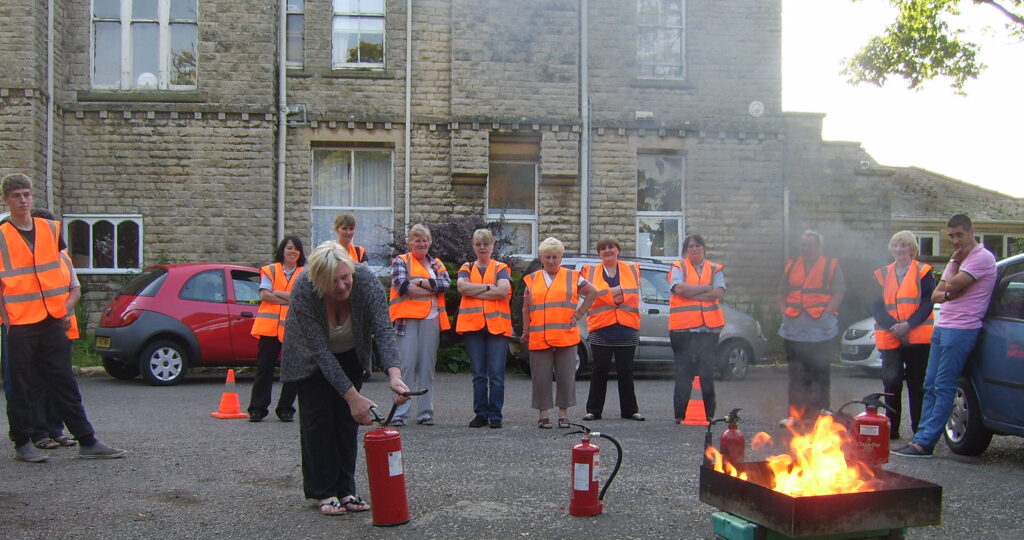
- Practical extinguisher use and fire‑blanket operation
- Emergency procedures for bedrooms, communal areas, kitchens, and offices
Benefits for Care‑Home Providers
- Meet CQC fire‑safety expectations and demonstrate compliance with UK legislation
- Reduce risk of service disruption and protect residents’ wellbeing
- Improve staff confidence and emergency readiness
- Strengthen Fire Risk Assessment outcomes
- Protect residents, staff, and essential equipment
- CPD‑accredited certificates; we can record professional registration numbers where appropriate
Why Choose PRT‑Training
Since 2009, we have delivered fire training for numerous care homes across the East Midlands. Our instructors bring over 50 years of combined firefighting experience and adapt training to your environment, staffing patterns, and resident needs.
We can deliver training on‑site or at a nearby venue — we routinely run sessions in communal lounges and training rooms. We even use a care home’s Summer House.
We understand the needs and complexities of care homes. Staff turnover, ever-changing legal responsibilities and caring for vulnerable residents 24 hours a day mean fire safety often goes overlooked.
Our CPD-accredited courses help care home managers meet CQC expectations, comply with UK fire‑safety legislation, and protect vulnerable patients through practical, scenario‑based instruction.

A few of our care home clients include:
- Oakdene & Ashdene Care Homes – Sleaford, Lincolnshire
- Abbeydale & Stanley House Nursing Homes – Derby, Derbyshire
- The Grange Residential Home – Saddington, Leicestershire
- Cathedral Green Court (retirement and independent living complex) – Peterborough, Cambridgeshire
- Wainfleet Care Home – Skegness, Lincolnshire
- Glenthorne & Selwyn Court Care Homes – West Midlands
Care Home Fire Safety FAQs
Book Your Care Home Fire Safety Training
If you would like more information or to enquire about booking a course, please get in touch with us using our online form below:
Alternatively, you can call or email us:
Call us on: 07921906519
Or email: peter@prt-training.co.uk